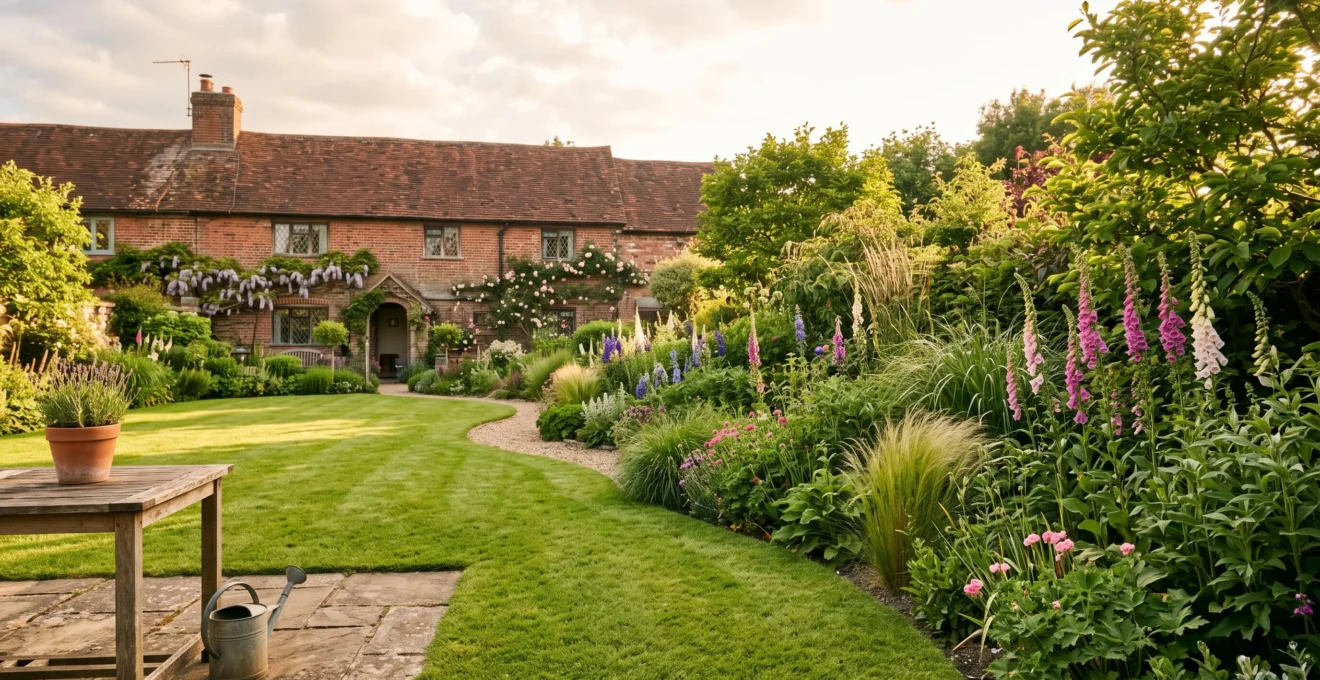
In summary:
- Focus on ‘Return on Time Invested’ (ROTI) by choosing features that signal an effortless lifestyle to buyers.
- Prioritise native, resilient plants and smart hardscaping over traditional, high-maintenance lawns and exotic species.
- Avoid common “low-maintenance” traps like cheap artificial grass, which can actively devalue your property.
- Invest in high-impact, low-effort kerb appeal, such as front door paint and container plants, for a significant financial return.
- The goal is a garden that not only looks good but also sells the dream of easy living, making your property sell faster and for more.
For many UK homeowners, the garden represents a paradox. It’s a space of potential joy and a significant asset, yet the thought of constant weeding, mowing, and pruning feels like a second job. The conventional wisdom is that a beautiful, manicured garden adds value. While true, this advice often ignores the most valuable commodity for modern buyers: time. Most potential owners are not looking for a horticultural project; they are buying a lifestyle, and a high-maintenance garden can signal a future of relentless work.
This is where the concept of ‘Return on Time Invested’ (ROTI) becomes critical. The secret to unlocking thousands in property value isn’t about creating a Chelsea Flower Show contender. It’s about making smart, strategic choices that create a beautiful, resilient, and, crucially, low-maintenance space. It’s about signalling to buyers that this home offers an effortless outdoor life, not a weekend burden. This guide moves beyond generic tips to provide a framework for making decisions that maximise aesthetic appeal and financial return while minimising your monthly time commitment.
We will explore how selecting the right plants and materials is a financial decision, not just a horticultural one. We’ll dissect the real-world trade-offs between lawns and alternatives, reveal the surprising elements that can deter buyers, and provide a clear plan for transforming even an overgrown space into a value-adding asset. Ultimately, you will learn how to build a garden that works for you now and pays you back handsomely when it’s time to sell.
Summary: A Strategic Guide to a High-Value, Low-Effort Garden
- Why Choosing Native Plants Over Exotic Varieties Saves 6 Hours Monthly
- How to Create a Garden That Thrives Through Both UK Droughts and Deluges
- Grass Lawn vs Gravel and Perennials: Which Saves 40 Hours Annually
- The Artificial Grass or Decking That Turns Off 60% of UK Buyers
- How to Revive an Overgrown Garden to Sale-Ready in One Weekend
- When £800 Spent on Front Door Paint and Plants Returns £4,000 at Sale
- How to Decide if Garden Access Justifies £200 Extra Rent in Your Situation
- What Makes UK Properties Sell in Under 30 Days While Others Languish for Months
Why Choosing Native Plants Over Exotic Varieties Saves 6 Hours Monthly
The single most effective strategy for reducing garden maintenance is to work with nature, not against it. Exotic plants, while often beautiful, are guests in a foreign ecosystem. They frequently require specific soil conditions, extra watering, and protection from pests they have no natural defence against. This translates directly into hours spent feeding, debugging, and general fussing. Native UK plants, on the other hand, are perfectly adapted to our climate, soil types, and rainfall patterns. They are the definition of a self-sufficient system.
Choosing natives means you are planting a garden that largely takes care of itself. Once established, plants like Hawthorn or Silver Birch require virtually no intervention. They have co-evolved with local wildlife, creating a balanced micro-ecosystem that manages pests naturally. This ecological coherence is the cornerstone of low-maintenance design. It’s not about letting the garden run wild; it’s about creating a resilient and stable environment that thrives without constant input from you. The time saved from watering, fertilising, and pest control can easily amount to several hours each month during the growing season.
The table below from Urban Bloom Gardening illustrates the ‘zero-effort’ benefits of specific UK native plants. Notice how their needs are aligned with our environment and how they contribute to local wildlife, creating a garden that is not only easy to manage but also ecologically rich.
| Plant | Sun / Soil Needs | Zero-Effort Maintenance Benefit | Wildlife Value |
|---|---|---|---|
| Silver Birch (Betula pendula) | Full sun, tolerates most soils | No staking once established; attractive bark needs no upkeep | Supports numerous insects and birds via bark crevices |
| Hawthorn | Sun to part shade, hedgerow habit | Virtually no care once established as a hedge | Co-evolved with moths, nesting birds and small mammals |
| Snowdrop | Shade under deciduous trees/shrubs | Disappears completely by summer — zero summer maintenance | Early nectar source for pollinators |
| Field Scabious | Sunny, dry-ish, copes with clay if drained | No deadheading needed for open border display | Essential food source for scabious mining bees |
| Bird’s-foot Trefoil | Sunny corners, low-growing legume | Ground-cover habit reduces mowing needs | Food plant for the common blue butterfly and many bees |
Ultimately, a garden filled with native species is a powerful signal to a potential buyer. It says, “This garden is beautiful, and it will stay that way without demanding your weekends.” This perception of an effortless lifestyle is a key driver of property value.
How to Create a Garden That Thrives Through Both UK Droughts and Deluges
The UK climate is increasingly one of extremes, swinging from summer heatwaves and hosepipe bans to prolonged periods of heavy rain. A garden that can only cope with one of these conditions is a high-maintenance garden. A truly smart garden is a resilient garden, designed to handle both drought and deluge with minimal intervention. This resilience is a significant value-add, as it ensures the garden looks good year-round, regardless of the weather, signalling a robust and well-planned property.
The key is twofold: smart plant selection and soil management. For drier, sunnier parts of the garden, choose drought-tolerant Mediterranean plants like Lavender, Rosemary, or ornamental grasses such as Stipa tenuissima. Their silvery leaves reflect sunlight, and their deep root systems seek out moisture efficiently. For damper, shadier areas, embrace plants that thrive in moist conditions, like Hostas, Ferns, and Astilbe. This “right plant, right place” philosophy is fundamental to reducing your workload.
The second part of the strategy is improving your soil. Adding plenty of organic matter, such as compost or well-rotted manure, works wonders in all conditions. In sandy soil, it helps retain moisture during dry spells. In heavy clay soil, it improves drainage, preventing plants from becoming waterlogged during downpours. Creating raised beds can also be a strategic solution for areas with poor drainage. This proactive approach to climate resilience is a sophisticated form of low-maintenance design.
As this image illustrates, it’s possible to create a visually coherent garden that accommodates different conditions. One side is prepared for sun and drought, the other for shade and moisture. This isn’t two separate gardens; it’s one intelligent, adaptable system that promises beauty without the constant battle against the weather.
For a buyer, a garden that looks lush after a dry spell and isn’t a swamp after a week of rain is a sign of a well-thought-out, high-quality home. It removes a major unknown and a potential source of future work, a peace of mind they are willing to pay for.
Grass Lawn vs Gravel and Perennials: Which Saves 40 Hours Annually
The traditional British lawn is an icon, but it is also the single most time-consuming feature of most gardens. The cycle of mowing, feeding, weeding, and scarifying can easily consume over 40 hours a year. For time-poor homeowners and prospective buyers, a vast expanse of perfect lawn can look less like a luxury and more like a life sentence. The strategic question is, therefore, not *if* you should have a lawn, but *how much* lawn you truly need, and whether an alternative could offer a better ‘Return on Time Invested’.
Replacing a portion of your lawn with a combination of gravel and perennial planting is a powerful low-maintenance move. A gravel garden, laid over a high-quality weed-suppressing membrane, requires a fraction of the upkeep. It provides a clean, modern aesthetic and is perfect for drought-tolerant plants. Perennials, which come back year after year, form the other half of the equation. Once established, a dense bed of perennials like Geraniums, Sedums, and Rudbeckia will out-compete most weeds and provide seasonal interest with minimal intervention.
Of course, there is an upfront investment in time and money to convert a lawn. The cost of materials and labour for hardscaping must be weighed against the long-term saving of 40+ hours per year. This isn’t about eradicating grass entirely. A small, well-defined area of lawn can be a valuable feature. The strategy lies in reducing the lawn to a manageable size and replacing the rest with a more self-sustaining combination of hardscaping and planting. This balance creates a garden that has structure, softness, and usability, without the relentless demands of a large monoculture of grass.
When a buyer views your property, a garden designed this way communicates intelligence. It shows that the outdoor space has been thoughtfully planned for maximum enjoyment and minimum work. That calculated balance is far more valuable than a featureless, demanding field of green.
The Artificial Grass or Decking That Turns Off 60% of UK Buyers
In the quest for low maintenance, many homeowners fall into a common trap: artificial materials. On the surface, plastic grass and cheap composite decking seem like the ultimate solution—no mowing, no staining, no problem. However, this is a classic example of a “solution” that can actively devalue your property. A significant portion of buyers perceive these materials as cheap, environmentally unfriendly, and a sign of a homeowner cutting corners. They lack the authenticity and tactile quality that people subconsciously seek in an outdoor space.
The problem is one of perception and longevity. Low-quality artificial grass can look garish and wear poorly, while cheap decking can warp and fade. More importantly, these materials deny the sensory experience of a garden. There is no scent of cut grass, no feel of real wood underfoot. For many buyers, this lack of a natural connection is a major turn-off. While they want low maintenance, they don’t want a sterile, plastic environment. It can create an impression of a home that lacks soul and quality.
Instead of synthetic shortcuts, the smarter investment is in high-quality, natural materials that age gracefully. A well-laid stone patio or a deck made from durable timber like cedar or a good quality hardwood will improve with age, developing a patina that adds character. These materials feel substantial and authentic, reinforcing a message of quality and thoughtful investment throughout the property. The ‘low-maintenance’ benefit should come from smart design, not from fake materials.
This image highlights the stark contrast between the rich, organic texture of real wood and the flat, uniform nature of plastic. This textural and aesthetic difference is immediately apparent to buyers and heavily influences their perception of the property’s overall quality and appeal.
Your garden is an extension of your home’s brand. Opting for authentic, durable materials sends a consistent message of quality that resonates with discerning buyers and protects your investment.
How to Revive an Overgrown Garden to Sale-Ready in One Weekend
An overgrown garden can be a major deterrent for buyers, suggesting neglect and a mountain of work. However, transforming it into a presentable, appealing space is often achievable in a single, focused weekend. The goal isn’t perfection; it’s to demonstrate potential and create a sense of ‘designed intentionality’. This rapid transformation can have a huge impact, with some research indicating that landscaping can increase property value by up to 77%.
The key is triage. Forget about intricate planting schemes and focus on high-impact tasks. The first step is to reclaim the space. Cut back wildly overgrown shrubs, clear away debris, and give the lawn (if you have one) a sharp, defining mow. This immediately brings a sense of order. The next step is to create definition. Edge the lawn, weed the most visible paths and patios, and create clear zones for seating or planting. This structure is what separates a ‘neglected’ garden from a ‘naturalistic’ one.
Power washing a patio or deck is one of the highest-impact jobs you can do, instantly making the space look cleaner and newer. Finally, add a touch of life. A few pots of colourful, seasonal plants placed by the back door or on a patio can make a world of difference. It shows care and attention to detail. This weekend blitz isn’t about a complete redesign; it’s about editing what’s already there to reveal the garden’s potential and remove the fear factor for buyers.
Weekend Garden Triage: Your 5-Step Action Plan
- Define the Zones: Identify the most important part of the garden (e.g., the patio or area seen from the main living room). Focus 80% of your effort here. Give the main lawn area a clean, short cut.
- Tame the Overgrowth: Radically prune or remove one or two of the most overgrown shrubs that are blocking light or paths. This single act can dramatically open up the space and reveal its true size.
- Create ‘Intentional’ Edges: Use a spade or half-moon edger to create a crisp, clean line between lawns and flower beds. Then, mow a neat path through any areas of longer grass to signal that the ‘wild’ look is a deliberate design choice, not neglect.
- Add Instant Impact: Power wash one key area of hardscaping (patio or path). Then, buy three to five identical pots and fill them with simple, hardy plants (like ferns or heucheras) to place in a group for a pop of curated colour and life.
- Mulch for a Clean Finish: Cover the soil in your main, newly-weeded flower beds with a thick layer of bark mulch. It instantly suppresses remaining weeds, makes the plants stand out, and gives the whole garden a professional, finished look.
A buyer who sees a tidy, well-defined garden, even a simple one, can project their own dreams onto it. By completing this weekend triage, you’re not just selling a garden; you’re selling the potential for a beautiful, manageable outdoor life.
When £800 Spent on Front Door Paint and Plants Returns £4,000 at Sale
While the back garden offers a lifestyle, the front of your house makes the first impression. This ‘kerb appeal’ is incredibly powerful and can determine a buyer’s mood before they even step inside. In fact, a survey found that a well-maintained exterior is a crucial factor for 93% of buyers when deciding whether to view a property. Fortunately, enhancing kerb appeal is one of the highest-ROTI activities you can undertake, with a small investment in paint and plants yielding a significant return.
The front door is the focal point. A fresh coat of paint in a carefully chosen colour is a simple weekend job that can have a disproportionate impact on value. While personal taste is a factor, data shows certain colours perform better. According to research, opting for a classic shade of blue can potentially increase a home’s value by as much as £4,000. Other strong performers include classic grey and black. The key is to choose a colour that complements the brick or stone of your house while looking smart and inviting.
The second part of the equation is planting. You don’t need a full front garden. Symmetrical planting offers a powerful sense of order and welcome. Two large, elegant pots flanking the front door, planted with simple, structural evergreens like boxwood balls or bay trees, create an immediate sense of luxury and care. This look is timeless and, crucially, signals low maintenance. A total spend of a few hundred pounds on paint, pots, and plants can easily generate a return of several thousand, making it one of the most financially astute improvements a seller can make.
This small-scale, high-impact project does more than just make your house look good; it frames the entire property as well-maintained and desirable from the very first glance, setting a positive tone for the rest of the viewing.
How to Decide if Garden Access Justifies £200 Extra Rent in Your Situation
While this guide focuses on adding value for a sale, looking at the rental market provides a fascinating insight into how outdoor space is quantified financially. Tenants regularly make cold, hard calculations about whether a garden justifies a significant monthly premium. Understanding their logic can help you, as a seller, appreciate the tangible value you are creating. A garden isn’t just a feature; it’s a service that provides space for relaxation, socialising, and play. This service has a market price.
For a renter, the calculation is a direct trade-off. Is the utility and pleasure derived from a private garden worth £200 more per month compared to a similar flat without one? For many, especially those with children, pets, or a desire for outdoor entertaining, the answer is a resounding yes. They are willing to pay a premium for the lifestyle enhancement that a garden provides. The £200 figure becomes a quantifiable value placed on having that private outdoor space.
As a homeowner preparing to sell, you can apply this logic. The low-maintenance, high-appeal garden you’ve created isn’t just an abstract ‘nice-to-have’. It offers a tangible lifestyle benefit that a significant portion of the market actively seeks and is prepared to pay for. When a buyer is comparing your property to another, the presence of an attractive, effortless outdoor space can be the deciding factor that justifies a higher offer. They may not be thinking in terms of monthly rent, but they are performing the same mental calculation: “Is the quality of life this garden offers worth the extra £X on the asking price?”
By creating a garden that is not only beautiful but also manageable, you are directly addressing this calculation. You are presenting a solution that offers maximum lifestyle benefit for minimum future effort, a value proposition that savvy buyers will recognise and reward.
Key Takeaways
- The greatest value comes from signalling an ‘effortless lifestyle’, not from complex, high-maintenance designs.
- Native plants and resilient design are your most powerful tools for reducing workload and increasing appeal.
- Authentic, natural materials consistently outperform synthetic shortcuts in the eyes of discerning UK buyers.
What Makes UK Properties Sell in Under 30 Days While Others Languish for Months
In a competitive property market, what separates a house that sells quickly from one that lingers for months? Often, the deciding factor is emotion. A successful property viewing isn’t just a tour of rooms; it’s an experience that allows buyers to project their future life into the space. A well-designed, low-maintenance garden is one of the most powerful tools for creating this emotional connection. It moves the conversation from square footage and boiler age to summer barbecues and relaxing weekends.
This emotional appeal has a direct financial impact. Research from estate agents Foxtons revealed that a staggering 72% of buyers are willing to pay more for a property with a garden. The key is that they aren’t just paying for the land; they are paying for the vision of the life they will lead there. A garden that is staged to feel like an outdoor living room—with comfortable seating, simple lighting, and a clear purpose—sells a dream. Crucially, if that dream also looks effortless to maintain, it removes the final barrier to a buyer falling in love with the property.
As expert Stephen Lovelady highlights, the coherence between the house and garden is paramount. The outdoor space should feel like a natural extension of the indoor living area, not an afterthought.
A well designed or landscaped garden that is coherent with the overall property, and blends seamlessly, can increase the overall property value by 20% compared to a property that has a blank garden.
– Stephen Lovelady, The Garden Value Report, Barker and Stonehouse
This is the ultimate goal: a garden that looks and feels like an irresistible part of the home. It’s an inviting, atmospheric space that is clearly designed for enjoyment, not for labour. By following the principles of strategic, low-effort design, you create a powerful asset that not only boosts your property’s financial value but also dramatically increases its saleability.
By focusing on the ‘Return on Time Invested’, you create a garden that appeals to both the head and the heart of a buyer, making your property the one they remember and, ultimately, the one they choose.