
Finding the right villa rental on Île de Ré can feel overwhelming when you face hundreds of listings with varying descriptions, prices, and reliability. The difference between a stress-free family vacation and a costly disappointment often comes down to method rather than luck. Instead of scrolling endlessly through photos, you need a structured approach that filters options systematically—by village character, accommodation capacity, essential amenities, realistic weekly budget, and verifiable trustworthiness of the listing and the platform behind it.
This guide walks you through a practical five-step decision framework that helps you compare villas objectively, understand the true cost of your stay, and book with confidence from a distance. Whether you are planning your first visit to this popular Atlantic island or returning to find the perfect base for your family, these criteria will help you narrow down your choice efficiently and avoid common pitfalls.
How to choose the right villa rental on Île de Ré: the key criteria at a glance
Direct answer: Choosing the right villa on Île de Ré requires prioritizing five criteria in sequence: first, select your village based on atmosphere and proximity to beaches or amenities; second, match capacity and bedroom count to your group size; third, identify must-have equipment such as pool, air conditioning, or garage; fourth, validate that the weekly price—typically ranging from around €1,043 to €4,480 depending on the villa—fits your budget when total costs are included; and fifth, verify the listing’s reliability through transparent pricing, genuine reviews, and access to a responsive local contact.
Most travelers start by browsing listings randomly, drawn by attractive photos or headline prices. This approach wastes time and increases the risk of booking a villa that does not match your actual needs. A more effective method treats villa selection as a decision tree: each criterion eliminates unsuitable options until you are left with a short list of genuinely appropriate properties.
Begin by fixing your travel dates and the number of people in your group, including children. These constraints are non-negotiable and should anchor every subsequent filter. Next, decide which village best suits your travel style—whether you prioritize a lively harbor town with restaurants and shops, a quiet family-friendly beach resort, or easy access from the mainland bridge. This geographic choice significantly impacts both the character of your stay and the price range you will encounter.
Once you have narrowed your search to a specific village or area, compare villas on objective criteria: number of bedrooms, maximum occupancy, and key amenities. For many families, a private pool or air conditioning during summer can be non-negotiable, while others may prioritize secure parking or close walking distance to the sea. Specialized platforms that focus on curated selections, such as villa rentals on Île de Ré, can simplify this filtering by offering verified listings with clear equipment details and local support.
The fourth step addresses budget transparency. The weekly base price you see in a listing is rarely the total amount you will pay. Additional costs—such as cleaning fees, linen, tourist tax, or seasonal surcharges—can add up quickly. Understanding this distinction helps you compare offers fairly and avoid unpleasant surprises at checkout. Finally, assess the reliability of the listing itself: check for detailed descriptions that go beyond marketing language, read recent guest reviews carefully, confirm that contact information for a local representative is clearly provided, and verify that all costs are itemized upfront.
By following this sequence, you transform a daunting search into a manageable series of clear decisions, each one bringing you closer to a villa that truly fits your needs and budget.
Which village of the Île de Ré should you base your stay in?
Your choice of village shapes the entire character of your stay on Île de Ré. Each of the island’s ten villages offers a distinct atmosphere, level of activity, and proximity to beaches or services. Understanding these differences helps you match your accommodation search to your actual priorities—whether you seek a calm family retreat, convenient access from the mainland, or a lively harbor town with evening dining and cultural attractions.
Rivedoux-Plage sits immediately after the bridge connecting the island to the mainland, making it the most accessible village if you arrive late or plan frequent trips back to the continent. This practical advantage appeals to families with young children who value shorter travel times and easy access to a sandy beach suitable for small kids. The village offers essential shops and restaurants without the premium prices or summer crowds found further west. If your priority is a straightforward, family-friendly beach stay without extensive exploring, Rivedoux-Plage delivers solid value.
Le Bois-Plage-en-Ré, located in the central part of the island, balances accessibility with a quieter residential feel. It attracts families and groups looking for spacious beaches, cycling paths through pine forests, and a village center that remains functional without being overly touristy. According to the official guide from Destination Île de Ré, Le Bois-Plage-en-Ré is within easy cycling distance of Saint-Martin-de-Ré, offering flexibility to enjoy both calm and activity. Villa availability here tends to be good, with a range of properties from traditional island houses to modern builds with pools.
Saint-Martin-de-Ré stands out as the historic capital of the island, recognized for its Vauban fortifications that hold UNESCO World Heritage status. This village combines architectural beauty with a vibrant harbor, boutique shops, weekly markets, and a wide selection of restaurants. It appeals to travelers who want culture, atmosphere, and evening entertainment alongside their beach holiday. However, popularity drives prices upward, and parking can become challenging during peak summer weeks. If your budget allows and you value a more urbane setting, Saint-Martin-de-Ré offers the most complete experience.
Les Portes-en-Ré, at the northern tip of the island, attracts visitors seeking tranquility, natural landscapes, and proximity to the lighthouse and nature reserve. The village feels more remote and wind-swept, with a focus on cycling, birdwatching, and long beach walks rather than shopping or nightlife. Villas here often come with larger gardens and more privacy, appealing to couples or families content with self-catering and outdoor activities. The trade-off is greater distance from the bridge and fewer immediate services, making a car or bicycles essential.
| Village | Best suited for | Key advantage | Main limitation |
|---|---|---|---|
| Rivedoux-Plage | Families with young children | Closest to mainland bridge | Less picturesque, more functional |
| Le Bois-Plage-en-Ré | Families seeking calm and space | Good balance of accessibility and tranquility | Limited evening activity |
| Saint-Martin-de-Ré | Couples and groups valuing culture | Historic charm, dining, shops | Higher prices, summer crowds |
| Les Portes-en-Ré | Nature lovers, quiet seekers | Remote, natural setting | Furthest from bridge, fewer services |
Choosing your village first allows you to filter listings geographically and focus your comparison on properties that genuinely match your travel style. Keep in mind that distances on Île de Ré are short—the island measures only about 30 kilometers from end to end—so even a villa in a quieter village keeps you within easy cycling or driving distance of all major attractions.

Capacity, equipment and budget: how to compare villa listings
Once you have selected your preferred village, the next step involves filtering villas by concrete specifications: how many people they accommodate, which amenities they offer, and what the stay will actually cost. This stage separates listings that look appealing from those that genuinely meet your practical requirements.
Matching capacity and bedrooms to your group
Villa listings typically display two numbers: total capacity and number of bedrooms. A property may advertise capacity for eight people but only offer three bedrooms—meaning some guests will sleep on sofa beds or in converted spaces. If everyone in your group expects a private bedroom with a proper bed, count bedrooms rather than relying solely on the capacity figure.
Families traveling with young children should also check whether cots or extra beds can be provided, and whether these count toward the official capacity. Some villas set a strict maximum occupancy for insurance or regulatory reasons, so clarifying this with the owner or platform before booking prevents later complications.
Identifying essential amenities
Amenities significantly affect both comfort and price. The most commonly sought features on Île de Ré include a private swimming pool, air conditioning, secure parking or garage, outdoor terrace with dining furniture, and proximity to the beach. Pools add considerable value during summer but also raise weekly rates. Air conditioning remains less common in traditional island properties, yet it can make a decisive difference during July and August heat waves.
Walking distance to the sea varies widely. Some listings marketed as “close to the beach” may still require a ten-minute walk or short drive. If direct beach access matters to you—especially with small children or elderly family members—verify the actual distance in meters, not vague descriptions. A few premium villas genuinely offer private gates opening onto coastal paths, but these command the highest prices.
Other amenities to consider include dishwasher, washing machine, outdoor shower for rinsing off sand, covered terrace for shade, barbecue, Wi-Fi quality, and bicycle storage. Make a clear distinction between nice-to-have features and genuine deal-breakers for your group, then filter accordingly.
Understanding weekly prices and total cost
The weekly rental rate displayed in listings represents the base price for accommodation only. It rarely includes all the costs you will pay. Additional charges commonly added at checkout include cleaning fees, which can range from €80 to €200 depending on villa size; linen and towel rental if not included; security deposit, usually held as a bank imprint or cash; and the tourist tax, which French regulations require to be itemized separately from the accommodation price. According to the French Ministry of Economy, the tourist tax must appear distinctly on your invoice, paid in addition to the rental price.
Some platforms or owners also charge booking fees, optional services like mid-stay cleaning, or seasonal surcharges during peak weeks. Always request a full breakdown before confirming your reservation. The difference between advertised weekly rate and final amount due can easily reach several hundred euros.
For context, weekly rental prices on Île de Ré typically range from around €1,043 to €4,480 depending on village, capacity, amenities, and season, according to listings commonly available on specialized platforms. Smaller properties in quieter villages start at the lower end, while large villas with pools, sea views, and premium locations in Saint-Martin-de-Ré or Les Portes-en-Ré occupy the upper range. Setting a realistic total budget—including extras—before you start comparing prevents wasting time on properties you ultimately cannot afford.
Checklist: reading a villa listing beyond the photos
- Count bedrooms separately from total capacity to ensure everyone gets proper sleeping space.
- Verify exact distance to the nearest beach in meters, not marketing language.
- Ask for itemized costs including cleaning, linen, deposit, and tourist tax before booking.
- Check whether air conditioning covers bedrooms or only common areas.
- Confirm parking availability if you plan to bring a car, especially in village centers.
Comparing listings side by side
When you have narrowed your search to three or four potential villas, create a simple comparison table listing each property’s bedrooms, capacity, key amenities, distance to beach, base weekly price, and estimated total cost. This side-by-side view reveals trade-offs clearly. For example, one villa may offer a heated pool but sit farther from the sea, while another provides direct beach access without a pool. Only you can decide which compromise better suits your priorities, but laying out the facts objectively makes that decision easier.
Pay attention to how listings describe their features. Vague language like “近ly renovated” or “well-equipped kitchen” often masks outdated appliances or incomplete amenities. Look for specific details: year of renovation, list of kitchen equipment, pool dimensions and heating, air conditioning in which rooms. Listings that provide this level of transparency tend to come from more reliable sources.
How can you book with confidence and avoid unpleasant surprises?
Booking a villa from a distance carries inherent risk. You rely on photos, descriptions, and reviews to make a significant financial commitment without physically inspecting the property. Reducing that risk requires systematically checking reliability signals before you pay.
Verifying reviews and ratings
Guest reviews offer the most direct insight into a villa’s actual condition and the owner’s responsiveness. However, not all review systems are equally trustworthy. Look for platforms that verify reviews by confirming that reviewers actually stayed at the property, and check whether reviews span multiple years and seasons. A villa with only recent five-star reviews but no older feedback may have changed hands, undergone renovations, or simply lack a track record.
Read several reviews in full rather than relying on star ratings alone. Specific comments about cleanliness, equipment functionality, accuracy of photos, and how the owner handled issues reveal far more than a numerical score. If multiple guests mention the same problem—for example, unreliable Wi-Fi, uncomfortable beds, or misleading photos—treat that as a red flag.
Assessing transparency and communication
Reliable listings provide clear, complete information upfront. You should be able to find detailed descriptions of each room, a full list of amenities and their condition, house rules regarding pets or smoking, cancellation policy, exact check-in and check-out times, and an itemized cost breakdown. If key details are missing or vague, contact the owner or platform directly with specific questions before booking.
Test responsiveness by asking a straightforward question about the property. A professional owner or agency should reply within 24 hours with a helpful, specific answer. Slow responses, evasive language, or reluctance to provide additional photos or information suggest potential issues.
For guidance on broader criteria to assess when choosing any seaside rental, you might consult this resource on selecting a beachside holiday rental in France, which outlines practical quality and reliability indicators.
Confirming local support and problem resolution
One advantage of booking through a specialized local platform rather than a generalist marketplace is access to a responsive local representative who can address problems during your stay. Before finalizing your booking, confirm that someone will be available locally by phone or in person if issues arise—for example, if appliances break, keys are lost, or the property does not match its description.
Ask explicitly who you should contact in case of emergency or complaint, and verify that this contact information will be provided before your arrival. Properties managed remotely by owners living far away or exclusively through automated systems leave you vulnerable if something goes wrong.
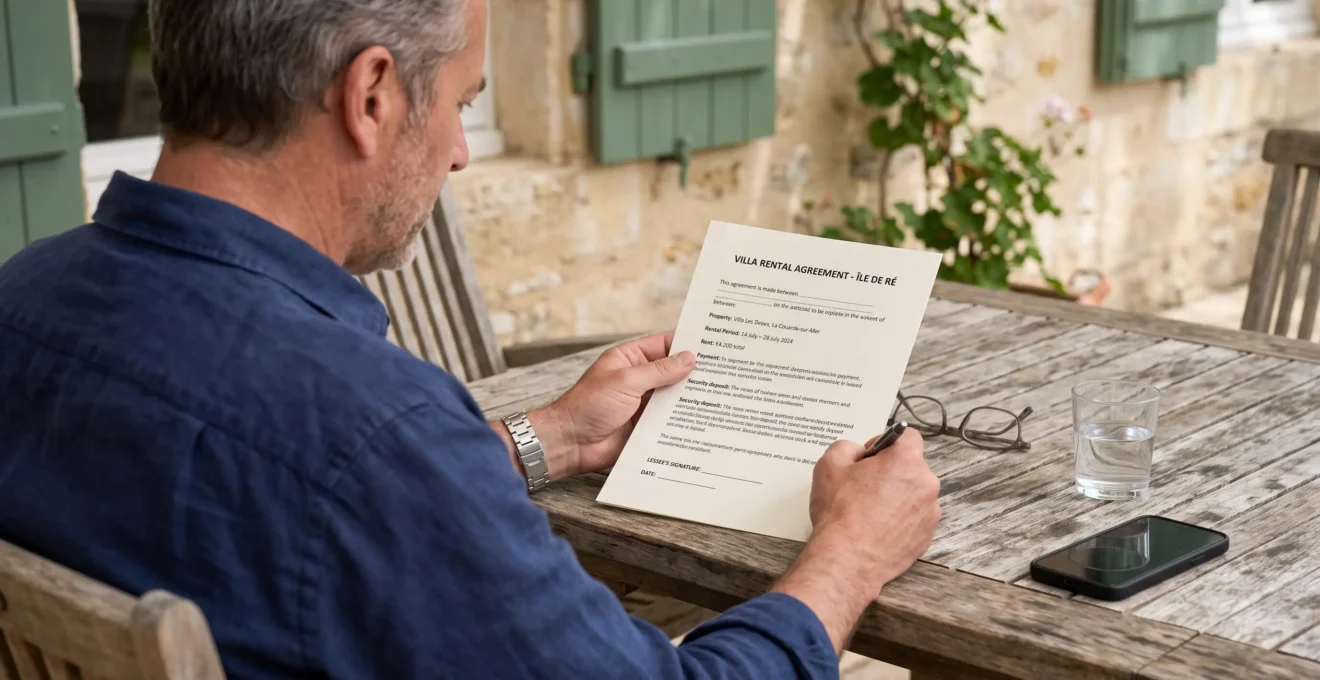
Transparent pricing as a trust signal: Platforms and owners who clearly itemize all costs—base rent, cleaning, linen, deposit, taxes, any optional services—before you enter payment details demonstrate professionalism and reduce the risk of hidden charges. Opacity around total cost often correlates with other reliability issues.
Understanding cancellation policies and insurance
Cancellation terms vary significantly between platforms and individual owners. Some offer flexible cancellation up to a few weeks before arrival, while others enforce strict no-refund policies once you book. Read cancellation terms carefully and factor them into your risk assessment, especially if your travel dates could change due to work or family circumstances.
Consider whether travel insurance that covers cancellation, trip interruption, or rental property issues makes sense for your situation. This adds cost but provides a safety net if unforeseen events force you to cancel or if the villa becomes uninhabitable due to damage or owner breach of contract.
Your action plan for booking the right villa on Île de Ré
With a clear understanding of the decision criteria, you are ready to move from research to action. Following a structured sequence reduces the risk of overlooking important details or making an impulsive choice you later regret.
- Fix your travel dates and group sizeDetermine your exact arrival and departure dates, the number of adults and children, and whether anyone has specific mobility or space requirements. These constraints are non-negotiable and filter everything else.
- Choose your village based on prioritiesDecide whether you value accessibility from the mainland, historic charm and dining options, family-friendly beaches, or remote tranquility. Use the village comparison earlier in this guide to narrow your geographic focus.
- Filter by capacity, bedrooms, and essential amenitiesSet minimum requirements for bedrooms, pool, air conditioning, parking, or beach proximity. Be realistic about which features are deal-breakers versus nice-to-have extras.
- Request full cost breakdowns for shortlisted propertiesAsk for itemized totals including cleaning, linen, deposit, tourist tax, and any seasonal surcharges. Compare total costs rather than base weekly rates to avoid misleading price differences.
- Verify reliability through reviews and communicationRead multiple guest reviews, check listing transparency, test responsiveness with a question, and confirm local support availability during your stay.
- Book early, especially for summer weeksÎle de Ré attracts heavy demand between April and October. According to the official tourism office, the island welcomes around 92 percent of its visitors between April and October, with 41.5 percent concentrated in July and August. Booking several months ahead improves both availability and choice.
- Confirm arrival details and local contact before departureA few days before you leave, reconfirm check-in time, key collection process, address with precise directions, and emergency contact information. Clarify any last questions about equipment or house rules.
This methodical approach transforms what often feels like an overwhelming decision into a series of manageable steps. By prioritizing criteria that genuinely matter to your group and verifying reliability at each stage, you significantly improve your chances of booking a villa that meets expectations and delivers a smooth, enjoyable stay.
If you are ready to explore curated villa options with transparent pricing and local support, start your search by reviewing available properties and filtering according to the criteria outlined in this guide. Taking the time to compare thoughtfully now prevents costly disappointment later and helps you secure the accommodation that truly fits your Île de Ré vacation.
How far in advance should I book a villa rental on Île de Ré for the summer?
For peak summer weeks in July and August, booking at least three to six months in advance is advisable. Popular villages like Saint-Martin-de-Ré and well-equipped villas with pools fill up quickly, especially for weekly rentals during school holiday periods. Booking early also gives you better selection and more time to compare options thoroughly.
Which villages on Île de Ré are best for families with children?
Rivedoux-Plage and Le Bois-Plage-en-Ré are particularly well-suited for families with young children. Both offer calm, sandy beaches with shallow water, good cycling infrastructure, and essential services without the bustle and higher prices of Saint-Martin-de-Ré. Rivedoux-Plage has the added advantage of proximity to the mainland bridge, reducing travel time.
What should I check in a villa listing beyond the photos before renting?
Look for specific details rather than marketing language: exact number of bedrooms and beds, precise distance to the nearest beach in meters, itemized cost breakdown including all fees and taxes, recent guest reviews mentioning cleanliness and accuracy, confirmation that amenities like air conditioning or pools are functional, clear cancellation policy, and verified local contact information for support during your stay.
Are villas with a pool and air conditioning much more expensive on Île de Ré?
Yes, both amenities typically add a significant premium to weekly rental rates. A private pool can increase the price by several hundred euros per week compared to similar properties without one, and air conditioning remains less common in traditional island villas, so properties offering it tend to command higher rates. Budget for these features if they are essential to your comfort, especially during hot summer weeks.
How can I avoid hidden fees when booking a holiday rental on Île de Ré?
Always request a complete, itemized cost breakdown before confirming your reservation. Ask explicitly about cleaning fees, linen and towel charges, security deposit amount and refund process, tourist tax, booking fees, and any seasonal surcharges. Reputable platforms and owners provide this information transparently upfront. If a listing only shows a base weekly rate without details, contact the owner directly and insist on full disclosure before proceeding.