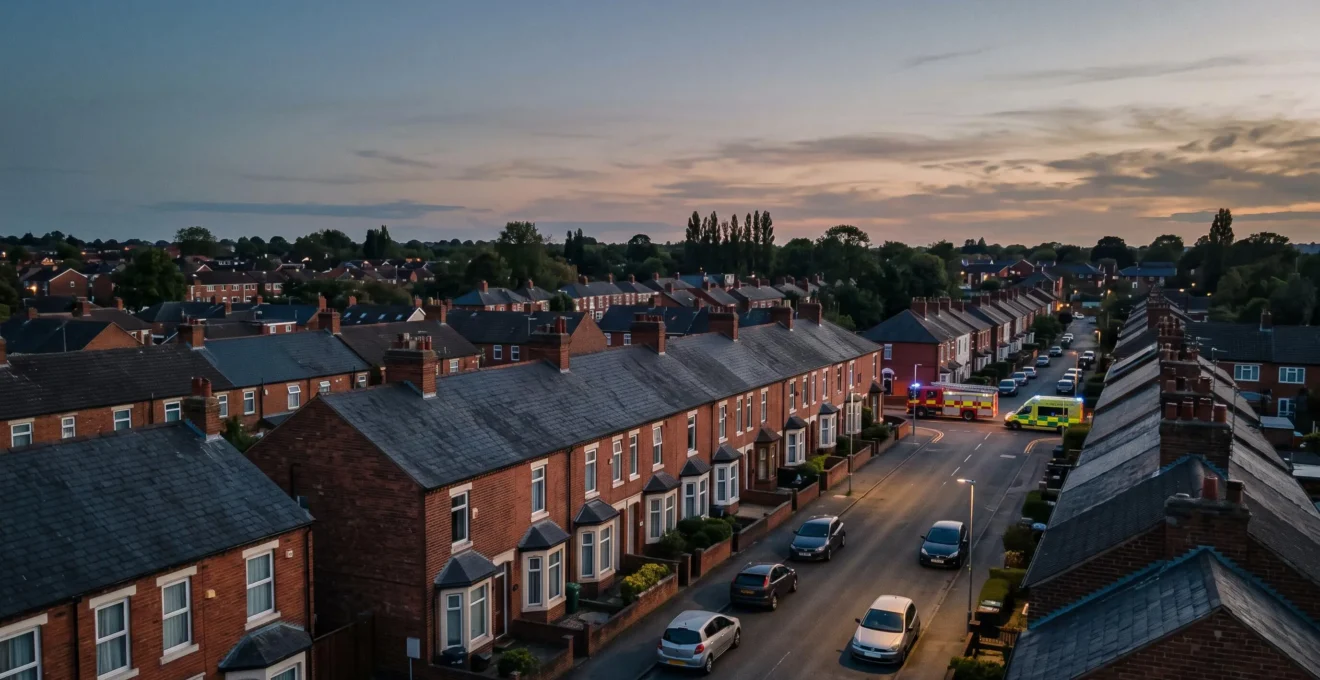
A property’s proximity to emergency services isn’t measured in miles, but in the critical minutes it takes for help to arrive.
- Ambulance response times vary dramatically by postcode and are influenced by call categories; official targets are frequently missed.
- Physical access for fire engines can be compromised by narrow rural lanes or dense urban parking, creating hidden risks.
Recommendation: Conduct a systematic ‘Response-Time Audit’ for any potential home, analysing official data and physical site constraints before making a decision.
When choosing a home, we meticulously research school catchments, commute times, and proximity to local shops. We create spreadsheets and score properties on lifestyle factors. Yet, we often overlook the most critical location metric of all: the time it takes for emergency services to reach your front door. The assumption is that in a crisis, help will simply arrive. But the difference between a five-minute response and a twenty-minute one can be the difference between recovery and tragedy.
The standard advice to “live near a hospital” is dangerously simplistic. It fails to account for the complex reality of emergency response in the UK. Factors like traffic, road width, ambulance availability, and even the presence of trained neighbours create a nuanced landscape of risk and resilience. The true measure of a location’s safety isn’t its distance on a map but its ‘effective proximity’—the quantifiable time to life-saving intervention.
This analysis moves beyond vague assurances and provides a framework for conducting your own ‘Response-Time Audit’. Instead of relying on assumptions, we will break down the specific, measurable factors that determine how quickly A&E, fire, and police services can reach you. We will explore how to interpret official NHS data, identify physical ‘access choke points’ that can delay a fire engine, and understand how community-level factors can bolster a location’s safety net.
By treating safety as a variable you can analyse, you can make a more informed housing decision. This guide will equip you with the knowledge to weigh a property’s emergency response resilience against its size, price, and other lifestyle benefits, ensuring the home you choose is not just desirable, but demonstrably safe.
This article provides a detailed breakdown of the key factors to consider when assessing a property’s safety profile based on emergency service access. The following sections will guide you through a comprehensive analysis of response times and preparedness.
Summary: A Guide to Emergency Service Proximity for UK Properties
- Why Living 15+ Minutes From A&E Increases Cardiac Emergency Mortality by 12%
- How to Check Average Ambulance Response Times by Postcode Before You Move
- City Centre vs Countryside: Which Location Gets 8-Minute Ambulance Response
- The Narrow Lane That Fire Engines Can’t Access in 30% of UK Villages
- How to Compensate for Remote Location With £300 of Emergency Preparedness
- Why a 10-Minute Walk to Your GP Actually Means 25 Minutes With a Toddler
- How to Secure 24/7 Plumber and Electrician Coverage for Your Rental Portfolio
- How to Weigh Lifestyle Quality Against Property Size and Commute Length
Why Living 15+ Minutes From A&E Increases Cardiac Emergency Mortality by 12%
The concept of the “golden hour” in emergency medicine is well-known, but for a cardiac arrest, the window for effective intervention is measured in minutes, not hours. The premise that living over 15 minutes from an Accident & Emergency department significantly worsens outcomes is rooted in this brutal reality. Every minute that a patient in cardiac arrest goes without CPR and defibrillation, their chance of survival decreases dramatically. While an ambulance provides the initial response, proximity to a fully equipped A&E for post-resuscitation care is a critical part of the survival chain.
This stark link between time, distance, and survival is not theoretical. As Dr. Sonya Babu-Narayan of the British Heart Foundation states in a release on ambulance response times, “With each minute lost, the risk increases of permanent brain or heart damage and even death.” This underscores that the clock starts the moment the emergency call is made, and geographic distance is a direct multiplier of that risk.
With each minute lost, the risk increases of permanent brain or heart damage and even death.
– Dr Sonya Babu-Narayan, British Heart Foundation news release on ambulance response times
Data from the Out-of-Hospital Cardiac Arrest Outcomes (OHCAO) registry, funded by the British Heart Foundation, provides a sobering perspective. The registry found that only around 8% of patients survived 30 days after an out-of-hospital cardiac arrest in England in 2022. This highlights how fragile survival is and how dependent it is on rapid response. The further a home is from the core infrastructure of emergency medical services, the more the ‘golden hour’ shrinks, placing an even greater burden on immediate bystander intervention and the speed of the initial ambulance crew.
Ultimately, a property’s distance from an A&E is a proxy for time-to-definitive-care. While not the only factor, it’s a powerful and non-negotiable part of the equation when assessing a location’s true safety profile for individuals with known health risks or for families seeking peace of mind.
How to Check Average Ambulance Response Times by Postcode Before You Move
Analysing a location’s safety net begins with understanding how emergency services categorise calls, as this dictates the target response time. Not all calls to 999 are treated equally. The NHS has a tiered system, and knowing which category to focus on is key to a meaningful ‘Response-Time Audit’. Your research should centre on Category 1 and 2 calls, as these represent the most life-threatening situations where minutes count.
Unfortunately, national targets are not always met, adding another layer of complexity. For instance, NHS England’s own data shows that the national average Category 2 response time was 36 minutes and 2 seconds in October 2024, significantly above the 30-minute interim target. This national average, however, masks huge regional variations. To get a true picture for a specific property, you must look at the data for the local NHS ambulance trust covering that postcode.
Most NHS ambulance trusts publish their performance data, often in board meeting minutes or annual reports. While not always user-friendly, this is the most direct source of information. Before diving into these reports, it is crucial to understand what you are looking for. The following steps provide a clear framework for decoding the data.
Your Action Plan: How to Decode NHS Ambulance Call Categories
- Identify Category 1 calls — these are for life-threatening conditions like cardiac arrest, with a targeted average response of under 7 minutes.
- Identify Category 2 calls — these are for emergencies such as strokes, severe burns, or chest pain, with a targeted average response of 18 minutes (though this has been relaxed to 30 minutes in some areas).
- Note Category 3 calls — these are for urgent but non-life-threatening conditions, with a target for 90% of calls to be reached within 2 hours.
- Focus your postcode research on the specific performance for Category 1 and 2 percentages and average times, as these reflect genuine life-safety risk.
By focusing your research on these critical categories, you can move beyond vague assurances and build a data-driven picture of the ‘effective proximity’ to emergency care for any given UK postcode.
City Centre vs Countryside: Which Location Gets 8-Minute Ambulance Response
The debate between urban and rural living often centres on lifestyle, space, and community. From a response-time perspective, however, the contrast is stark. A dense city centre, with its proximity to hospitals and ambulance stations, is theoretically better positioned to meet the ambitious 8-minute target for the most critical Category 1 calls. However, this advantage can be eroded by traffic congestion and access issues, which can turn a short distance into a lengthy journey.
Conversely, rural locations inherently struggle with the tyranny of distance. A journey of several miles on winding country roads makes an 8-minute response almost impossible for a conventional ambulance. This has historically created a dangerous gap in emergency care for countryside communities. The challenge is clear: how to provide a rapid response when the nearest ambulance station is 20 minutes away?
This is where the concept of ‘Safety Net Resilience’ becomes critical. Recognising this gap, many parts of the UK have developed a powerful layer of support: Community First Responder (CFR) schemes. A study funded by the NIHR highlighted how these schemes have become an essential part of the rural emergency response. The research shows there are over 2,400 CFR schemes with 12,000 volunteers across the UK. These trained locals are dispatched by the ambulance service to the most urgent calls in their area, arriving ahead of the ambulance to provide vital early interventions like CPR and defibrillation. They effectively act as a crucial ‘safety net’, narrowing the urban-rural response gap, though not eliminating it entirely.
Therefore, a response-time audit for a rural property must go beyond checking ambulance trust data. It should involve investigating the presence and activity of a local CFR group, adding a qualitative layer to the quantitative data.
The Narrow Lane That Fire Engines Can’t Access in 30% of UK Villages
While ambulance response is a function of time and distance, fire response introduces a critical third variable: physical access. A fire engine is a large, heavy vehicle, and if it cannot get close to a property, its effectiveness is severely limited. This creates hidden risks in locations that may otherwise seem idyllic, particularly in older towns and rural villages where road layouts predate modern vehicles. The title’s claim that access is impossible in 30% of UK villages highlights a widespread problem of ‘access choke points’.
These choke points can be narrow lanes, tight corners, low bridges, or even inconsiderate parking in dense terraced streets. The standards are exacting for a reason. According to Approved Document B of the Building Regulations, vehicle access for a fire appliance must reach to within 45 metres of all points inside a dwelling, via an access road at least 3.7 metres wide. For many older properties, especially those down long private tracks or in historic village centres, this standard is simply not met.
This “last mile problem” has forced fire services to innovate. The Devon and Somerset Fire and Rescue Service, for example, introduced a fleet of smaller, more agile Light Rescue Pumps and Rapid Intervention Vehicles. These were specifically commissioned because their standard appliances struggled to navigate the region’s narrow rural roads and streets clogged with parked cars. This illustrates that the problem is so significant that services are engineering bespoke solutions around it. However, not all fire services have this capability, and reliance on a standard engine remains the norm.
A prospective buyer or renter should physically trace the route from the nearest main road to the property, asking a simple question: could a vehicle the size of a refuse lorry pass without difficulty? If the answer is no, then a significant safety risk exists, one that must be weighed heavily in the final decision.
How to Compensate for Remote Location With £300 of Emergency Preparedness
If your property audit reveals longer response times or access issues, it does not automatically render the location unsafe. It means that the burden of ‘effective proximity’ shifts from the emergency services to you. By investing in skills and basic equipment, a household can dramatically improve its resilience and shrink the effective time-to-intervention. An investment of as little as £300 in equipment, combined with free training, can create a powerful personal safety net.
The most critical skill is CPR and the use of a public-access defibrillator (AED). Shocking data from the BHF-backed OHCAO registry shows that while bystanders performed CPR in over 70% of witnessed cardiac arrests, a public-access defibrillator was used in fewer than 10% of cases. This huge gap suggests that while people are willing to help, they lack the confidence or knowledge to use a defibrillator. Completing a free, 15-minute online training course like the British Heart Foundation’s RevivR tool can bridge this gap. The next step is to locate the nearest public AED—often on the outside of village halls, pubs, or phone boxes—and note its location and access code.
Beyond life-support skills, basic emergency preparedness for situations like power cuts or being temporarily cut off by floods or snow is a wise investment. This includes a comprehensive first aid kit, a powerful torch, spare batteries, a wind-up radio, and a power bank for mobile phones. Keeping a small stock of bottled water and non-perishable food is also a fundamental part of preparedness. These items ensure that a delay in service response does not escalate into a more serious crisis.
By combining trained skills with a modest investment in equipment, you effectively reduce your reliance on the ‘golden hour’ and build a ‘golden ten minutes’ of self-sufficiency, a vital buffer in any remote or hard-to-access location.
Why a 10-Minute Walk to Your GP Actually Means 25 Minutes With a Toddler
The principle of ‘effective proximity’ extends beyond life-or-death emergencies into the realm of daily health and convenience. Real estate listings often market proximity to amenities like a GP surgery as a key benefit, usually measured by a simple walking or driving time for a healthy adult. However, anyone with young children, elderly relatives, or mobility challenges knows that this “map time” rarely reflects reality.
A 10-minute walk to the local GP surgery sounds ideal. But for a parent with a toddler, that same journey can easily become a 25-minute ordeal. It involves navigating a pushchair, stopping to examine every interesting leaf and puddle, and managing a small child who may be feeling unwell and uncooperative. The short, direct route may involve a steep hill or a set of steps, rendering it impassable with a buggy and forcing a much longer detour.
This same logic applies to elderly individuals or those with mobility aids. A journey that is simple for an able-bodied person can become a significant logistical challenge when factoring in rest stops, avoiding uneven pavements, or waiting for pedestrian crossings. What is presented as a convenient 10-minute walk can become a tiring 20-minute excursion, potentially discouraging regular or timely visits to the doctor.
Therefore, when assessing proximity to a GP, dentist, or pharmacy, you must conduct a personal audit. Walk the route at the pace of the slowest member of your household, and do it at the time of day you would most likely be travelling. Only then can you determine if the advertised convenience is a reality for you.
How to Secure 24/7 Plumber and Electrician Coverage for Your Rental Portfolio
For landlords and property managers, the definition of an ’emergency’ extends to critical infrastructure failures. A burst pipe or a complete electrical outage at a rental property is not just an inconvenience; it’s a significant operational and financial risk that demands an immediate response. Ensuring 24/7 coverage is a core part of a landlord’s duty of care and a key component of maintaining a professional, resilient rental portfolio.
Relying on a single, local tradesperson is a fragile strategy. They may be unavailable, on holiday, or simply overwhelmed with work when your emergency strikes. A more robust approach involves a multi-layered ‘safety net’. The first layer is often a dedicated home emergency insurance policy. These policies, offered by numerous providers, typically include 24/7 call-out services for plumbing, electrical, and heating emergencies for a fixed annual fee. For landlords with multiple properties, portfolio-wide policies can offer a cost-effective and scalable solution, providing a single number for tenants to call in a crisis.
The second layer is building a private network of trusted, vetted tradespeople. This should not be a single plumber or electrician, but a primary contact and at least one or two backup options. This network is invaluable when a problem falls outside the strict terms of an insurance policy or when you require a more complex repair rather than just an emergency patch. Building these relationships in non-emergency situations is key; finding a reliable electrician at 10 PM on a Sunday during a power cut is a stressful and expensive exercise.
Ultimately, securing 24/7 coverage is about moving from a reactive to a proactive management style. It involves investing in systems—whether through insurance or a network of contractors—that guarantee a rapid response, protect the asset, and maintain tenant satisfaction.
Key Takeaways
- A property’s safety is best measured by ‘effective proximity’—the actual time to intervention—not just geographic distance.
- Official data on ambulance response times and building regulations for fire access provide hard metrics for a ‘Response-Time Audit’.
- Personal preparedness, including CPR skills and basic emergency kits, can significantly mitigate the risks associated with a remote or hard-to-access location.
How to Weigh Lifestyle Quality Against Property Size and Commute Length
The final decision on a home always involves a series of trade-offs. The classic dilemma pits property size against commute length, or a large garden against proximity to urban amenities. We intuitively weigh these factors, trying to find the optimal balance for our desired lifestyle. However, this article argues for the inclusion of a crucial, often-overlooked metric in this equation: quantifiable emergency resilience. A ‘Response-Time Audit’ is not about generating fear, but about adding a vital data point to the complex matrix of lifestyle quality.
A large, beautiful house in a remote rural location may seem to offer a high quality of life. But if that life quality is contingent on an ambulance response time of over 40 minutes and fire engine access being blocked by a narrow bridge, is the trade-off worth it? Conversely, a smaller city-centre flat with a sub-7-minute Category 1 ambulance response and multiple nearby A&E departments offers a different kind of life quality—one based on a robust safety net.
The goal is to make this choice consciously. By following the steps outlined—analysing ambulance data, assessing fire access, and understanding the role of community responders and personal preparedness—you can assign a tangible value to a property’s safety profile. This allows you to compare it directly against other factors. You might decide the risk is acceptable, or you might choose to mitigate it through training and equipment. The important thing is that the decision is informed.
Begin today by applying this analytical framework to your current or prospective home. By conducting a thorough Response-Time Audit, you are not just buying or renting a property; you are investing in a demonstrably safe environment for yourself and your family.