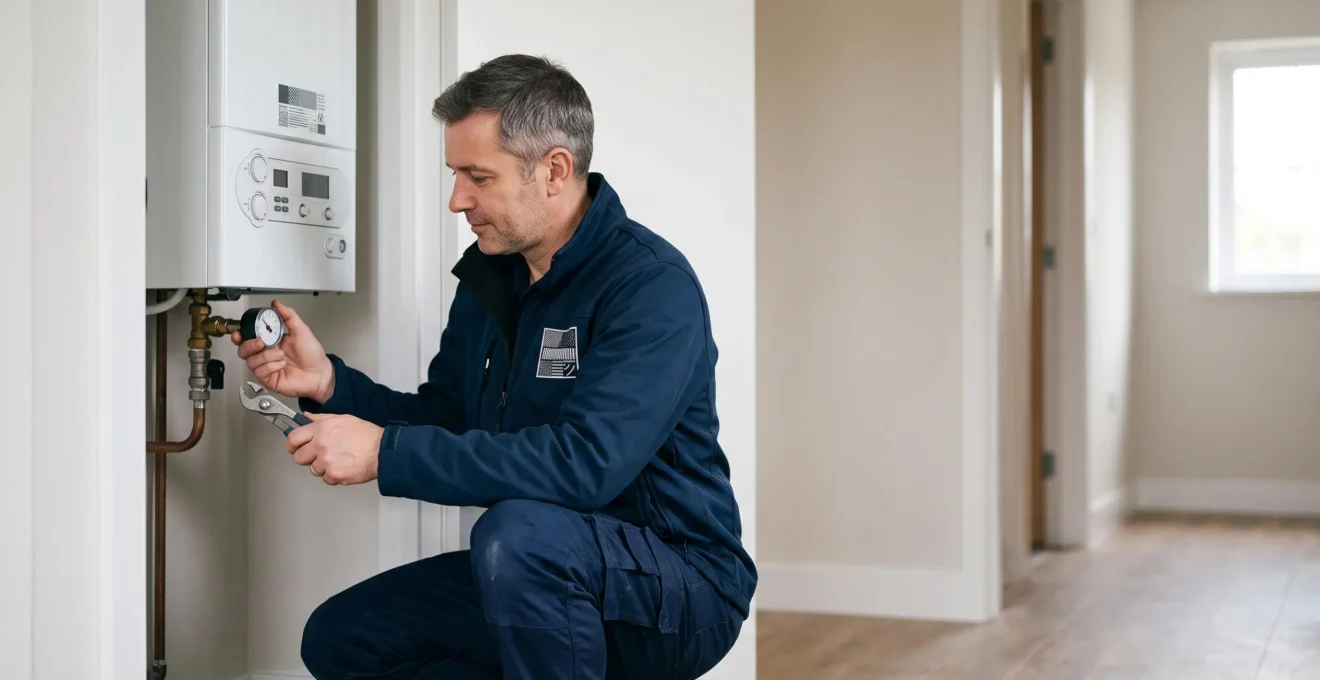
Effective HVAC management is not an expense but a calculated financial strategy to protect your rental property’s profitability and asset value.
- Skipping legal checks can lead to catastrophic fines, while proactive repairs and upgrades follow a clear return-on-investment logic.
- Understanding the financial tipping point between repairing an old boiler and replacing it can save you thousands over the system’s lifespan.
Recommendation: Shift from a reactive “fix-it-when-it-breaks” mindset to a proactive asset management approach for your property’s heating and ventilation systems today.
For any UK landlord, the dreaded winter phone call about a broken boiler is a scenario that triggers immediate stress. It’s not just the cost of an emergency callout; it’s the cascade of potential problems: an unhappy tenant, the threat of legal disputes, and the risk of significant damage to your property. The common advice is to simply “get the boiler serviced,” but this barely scratches the surface of a professional asset management strategy. True financial security in the rental market comes from understanding the deeper economic principles at play.
The real key to avoiding £3,000 emergency breakdowns and maximising your investment isn’t just about ticking compliance boxes. It’s about adopting a specialist’s mindset, treating your property’s heating, ventilation, and air conditioning (HVAC) system as a critical financial asset. This means learning to perform a cost-benefit analysis for every decision, from a minor repair to a full system upgrade. It’s about knowing when a £400 repair is a smart move and when it’s just delaying a £2,500 replacement that offers better long-term returns.
This guide moves beyond the basics. We will dissect the financial calculus behind every critical HVAC decision you’ll face as a landlord. We’ll explore the real cost of non-compliance, the economic arguments for system upgrades, and how to handle emergencies to mitigate financial loss, turning potential liabilities into a well-managed, profitable component of your property portfolio.
To navigate these crucial decisions, this article breaks down the essential financial and strategic considerations. Below is a summary of the key areas we will cover to help you build a robust and cost-effective HVAC management plan for your rental properties.
Summary: How to Maintain HVAC Systems to Prevent £3,000 Emergency Breakdowns in Rentals
- Why Skipping Annual Gas Safety Checks Risks £6,000 Fines and Tenant Deaths
- Repair a 12-Year Boiler for £400 or Replace for £2,500: Which Decision Saves Money
- Gas Boiler vs Electric Heat Pumps: Which Heating System Attracts More UK Tenants
- The Broken Heating in Winter That Justified £2,400 Rent Deduction at Tribunal
- How a £1,800 Thermostat and Controls Upgrade Reduces Tenant Turnover by 30%
- Why £400 of Loft Insulation Saves £300 Annually on Heating Bills
- Annual Boiler Cover at £240 vs Paying Per Callout: Which Saves Money Over 5 Years
- How to Handle Rental Property Emergencies Without Losing £5,000 in Damage
Why Skipping Annual Gas Safety Checks Risks £6,000 Fines and Tenant Deaths
For a landlord, the annual Gas Safety Check is not an optional maintenance task; it is a non-negotiable legal obligation with severe consequences for non-compliance. The financial risks go far beyond a simple penalty. In the UK, landlords face fines of up to £6,000 per appliance for failing to provide a valid Gas Safety Certificate, with the potential for unlimited fines and even imprisonment in the Crown Court if a tenant is harmed. This is not a theoretical risk. The primary purpose of this regulation is to prevent carbon monoxide poisoning and explosions, which can and do lead to tenant fatalities.
The financial penalties can escalate rapidly, as seen in real-world enforcement actions. Ignoring this duty is a direct route to financial disaster and a criminal record.
Case Study: The Cost of Systemic Negligence
In a stark warning to landlords, the London Borough of Hammersmith and Fulham was fined a staggering £83,600 plus £15,553 in costs by the Health and Safety Executive (HSE) in 2011. The penalty was for a systemic failure to carry out annual gas safety checks across several of its rented properties. This case highlights how costs balloon well beyond the initial fine once legal proceedings begin, cementing the principle that consistent, documented compliance is the only financially sound strategy.
To avoid these catastrophic risks, a systematic approach to compliance is essential. This is not an area for ambiguity or corner-cutting. Adhering to a strict, documented process is the only way to protect yourself, your tenants, and your investment.
Your Gas Safety Compliance Action Plan
- Engineer Check: Arrange for a Gas Safe registered engineer to inspect every gas appliance and flue in the property every 12 months without fail.
- Tenant Copy: Provide your tenants with a copy of the new gas safety record within 28 days of the check, and ensure new tenants receive it before they move in.
- Record Keeping: Keep all your gas safety records for a minimum of two years. This creates an evidence trail of consistent compliance, which is invaluable in case of a dispute.
- Systematic Reminders: Implement a calendar system with reminders set at least two months before the certificate’s expiry date to allow ample time to schedule the engineer.
- Tenant Communication: Maintain clear communication with your tenants to arrange access for the engineer, documenting all attempts to do so.
Repair a 12-Year Boiler for £400 or Replace for £2,500: Which Decision Saves Money
Every landlord will eventually face the classic dilemma: an ageing boiler breaks down, and you must decide whether to fund another repair or invest in a full replacement. This decision should never be based on gut feeling. It is a financial calculation where the wrong choice can lead to throwing good money after bad. A simple repair seems cheaper upfront, but repeated callouts for a boiler past its design life quickly erode any initial savings, not to mention the loss of tenant goodwill with each breakdown.
The financial tipping point is the key. Nationally, the average UK boiler repair costs around £300, while a full replacement is a significant outlay of roughly £2,500 to £4,000. The core question is not “what is the cheapest option today?” but “what is the total cost of ownership over the next 5-10 years?”. A new, energy-efficient boiler not only eliminates repair bills but also reduces running costs—a benefit that can be passed on to tenants or used to justify a higher rent, and it adds to the capital value of your property.
To move from guessing to a calculated decision, a structured decision matrix is the professional’s tool. It helps objectify the choice by weighing the most critical factors: the boiler’s age, the cost of the repair relative to a new installation, and the frequency of recent breakdowns.
| Decision Criterion | Favours Repair | Favours Replacement |
|---|---|---|
| Boiler Age | Under 12 years | Over 12 years — parts harder to source |
| Repair Quote vs New-Boiler Cost | Below 40% of new-boiler cost | Above 40% of new-boiler cost (typically £2,500) |
| Breakdown Frequency | 0–1 breakdown in 24 months | 2+ breakdowns in 24 months — systemic wear risk |
The data is clear. If a boiler over 12 years old requires a repair costing more than 40% of a new unit, or if it’s the second breakdown in two years, replacement is almost always the more economically sound decision. Continuing to repair a unit exhibiting these signs is not saving money; it’s financing its inevitable, and likely more expensive, final failure.
Gas Boiler vs Electric Heat Pumps: Which Heating System Attracts More UK Tenants
The conversation around residential heating is changing. While the traditional gas boiler remains the default for most UK rental properties, the rise of electric air source heat pumps presents a new strategic choice for forward-thinking landlords. The decision is no longer just about upfront cost; it’s about future-proofing your asset, appealing to a new generation of eco-conscious tenants, and aligning with long-term government policy. However, the practical realities of the rental market mean this choice is complex.
For decades, gas has been the undisputed king, and for good reasons. As the National Residential Landlords Association (NRLA) points out, familiarity and infrastructure are powerful forces.
Gas boilers remain the dominant choice in the UK’s rental sector for good reason. They’re familiar, widely serviced, faster to install, and cheaper upfront.
– NRLA (National Residential Landlords Association), Gas boiler or heat pump: A practical guide for landlords
Conversely, heat pumps offer a compelling long-term narrative: lower running costs, a longer lifespan, and a significantly smaller carbon footprint. With government grants like the Boiler Upgrade Scheme (BUS) softening the initial financial blow, the economic case is strengthening. Furthermore, data shows high user satisfaction, with a recent survey confirming that 79% of UK heat pump owners report being very or fairly satisfied with their system. For landlords, this translates to a potentially stronger appeal for tenants who prioritise sustainability and lower energy bills.
The decision requires a clear-eyed comparison of the financial and practical implications of each technology over its entire lifecycle.
| Factor | Gas Boiler | Air Source Heat Pump |
|---|---|---|
| Install Cost | £2,500–£4,500 | £10,800 before grant / ~£3,300 net after £7,500 BUS grant |
| Lifespan | ~12 years | ~20 years |
| Annual Heating + Hot Water Cost | £1,180 | £930 (on a heat-pump tariff) |
| Maintenance | Well-established UK service network, same-week repairs | ~£100/year service; rare-fault repairs can take 2–4 weeks |
Currently, the gas boiler often wins on upfront cost and serviceability, making it the low-risk choice for many landlords. However, as installation costs for heat pumps fall and the service network grows, the balance may shift. A landlord looking to hold a property for 10+ years might find the 20-year lifespan and lower running costs of a heat pump a superior long-term investment, especially for attracting discerning, long-stay tenants.
The Broken Heating in Winter That Justified £2,400 Rent Deduction at Tribunal
Nothing erodes tenant goodwill and exposes a landlord to financial risk faster than a loss of heating and hot water in winter. Under Section 11 of the Landlord and Tenant Act 1985, landlords are legally obligated to keep these installations in repair. Failure to act within a “reasonable time” is not just poor service; it’s a breach of contract that can land you in front of a First-tier Tribunal, with costly consequences. The term “reasonable” is interpreted very narrowly during cold weather, where a delay of even a few days can be deemed unacceptable.
The financial penalty isn’t a fixed fine but a rent abatement for “loss of amenity.” This is where the costs become substantial. As an industry guideline, courts and tribunals often value loss of amenity at 25%–100% of rent for the affected period. A total loss of heating in mid-winter can easily justify a 100% rent refund for the entire duration of the disrepair. For a property with a £1,200 monthly rent, being without heating for two months could result in a legally-mandated £2,400 deduction, plus any costs the tenant incurred for temporary heaters.
This isn’t a hypothetical scenario; it’s a reality for landlords who fail to act decisively. The tenant’s experience is central to any tribunal’s decision.
Once notified, a landlord is under a legal duty to keep space heating and water heating installations in repair within a reasonable time, treated as urgent in winter; what is reasonable to ask for is normally framed as a rent abatement for loss of amenity during the affected period, plus repayment of out-of-pocket losses such as heaters or extra electricity.
– Tenant testimony, JustAnswer Legal Forum
In the event of a dispute, the burden of proof often falls on the tenant, but a well-documented case is difficult for a landlord to defend. Tenants are advised to keep a full communication history, collect photographic evidence, and obtain reports from Environmental Health if necessary. As a landlord, your best defence is a proactive offence: a robust system for logging tenant issues, a list of trusted emergency engineers, and a clear record of acting swiftly and decisively to resolve the problem.
How a £1,800 Thermostat and Controls Upgrade Reduces Tenant Turnover by 30%
In a competitive rental market, retaining good tenants is a significant financial lever. Every void period costs money in lost rent and marketing fees. While a reliable boiler is a must-have, upgrading the way tenants interact with their heating can be a powerful, and often overlooked, tool for increasing tenant satisfaction and retention. Investing in modern smart thermostats and heating controls is not just about technology; it’s about giving tenants greater control, comfort, and lower energy bills—a combination that makes a property significantly more attractive.
The data supports this strategy. Studies show that a well-implemented smart heating system is a feature tenants value and are less likely to leave. According to industry analysis, UK rentals with smart heating and proper onboarding see tenant retention rates climb by as much as 16–19%. While the title’s 30% figure represents a best-case scenario for a high-turnover property, even a 15% improvement has a direct and positive impact on your annual yield. This demonstrates that a one-time capital outlay can generate recurring annual savings.
The return on investment (ROI) can be surprisingly rapid, especially when deployed across a portfolio of properties. The key is to see the upgrade not as a cost, but as an investment with a measurable payback.
Case Study: Portfolio-Wide Smart Control Rollout
An analysis of multi-unit projects reveals the compelling financial case for smart thermostat upgrades. Trade installers report that a typical £2,500 outlay on a small portfolio of properties can yield £1,800 in annual savings, primarily through reduced tenant turnover and the ability to command slightly higher rents. This results in a 16-month payback period, meaning the investment pays for itself well within a standard 24-month tenancy cycle, and continues to deliver profit thereafter.
To maximize this return, the choice of technology must be strategic. The goal is to match the device to both the property type and the likely tenant. A large house might benefit from smart zoning to save energy, while a young professional in a one-bed flat might prioritise the convenience of app control. The key is to select upgrades that add demonstrable value, enhancing the living experience and making your property the one they choose to call home for longer.
Why £400 of Loft Insulation Saves £300 Annually on Heating Bills
In the financial calculus of property management, some investments offer a return so significant and reliable they become a strategic necessity. Upgrading loft insulation is one of them. For a typical uninsulated or under-insulated property, approximately 25% of all heat is lost through the roof. A one-time investment of around £400 to install or top-up loft insulation to the recommended 270mm depth can, as the title suggests, slash annual heating bills by up to £300. This is a payback period of less than 18 months—an ROI that is almost impossible to find elsewhere.
For a landlord, this isn’t just about saving the tenant money. It’s a multi-faceted strategic win. Firstly, it significantly improves the property’s Energy Performance Certificate (EPC) rating, which is a legal requirement for letting a property in the UK. With regulations tightening, a poor EPC rating could render a property unlettable in the future. Secondly, a warmer, more energy-efficient home leads to higher tenant satisfaction and retention. Tenants are more comfortable, have lower outgoings, and are less likely to complain or leave. This translates directly to a healthier bottom line for the landlord.
This image shows a close-up of the fibrous material that makes a critical difference in a property’s thermal efficiency. Investing in this simple material is one of the most cost-effective upgrades a landlord can make.
As you can see, the dense, layered nature of the insulation is what traps air and prevents heat from escaping. The process is straightforward, minimally disruptive, and the materials are relatively inexpensive. Given the rapid payback period and the long-term benefits to the property’s compliance, value, and desirability, failing to have adequate loft insulation is akin to actively choosing to waste money every single year. It’s the foundational first step in any sensible HVAC and energy management strategy.
Annual Boiler Cover at £240 vs Paying Per Callout: Which Saves Money Over 5 Years
The choice between an annual boiler cover plan and paying for repairs as they happen is another critical financial decision for a landlord. On the surface, paying £20-£30 per month (£240-£360 per year) for a service contract can seem like an unnecessary expense, especially if the boiler is relatively new and reliable. The temptation is to save that money and simply “risk it.” However, this approach ignores the true cost and nature of emergency breakdowns.
A preventative maintenance mindset requires looking at the risk-adjusted cost over a longer timeframe, such as a typical 5-year boiler lifecycle period. An emergency callout is always more expensive than a scheduled repair. Data shows that while the average UK boiler repair costs around £300, with emergency call-outs nearer £450. This £150 premium is the price of reactivity. One single winter emergency callout could wipe out nearly two years’ worth of boiler cover payments.
Let’s model this over five years. Without cover, a landlord with one major breakdown (£450) and two minor repairs (£200 each) would spend £850. With a typical cover plan costing £240/year (which often includes the annual service worth ~£80), the total cost over five years is £1,200, but with budget certainty and faster response times. The purely financial break-even point is therefore around two significant incidents in five years. However, this calculation omits the most valuable features of a service contract for a landlord: peace of mind and tenant management. A good boiler cover plan means one phone call is all that is needed to get a qualified engineer dispatched, often with priority service. This offloads the stress of finding a reliable tradesperson at short notice and demonstrates to the tenant that you are responding immediately, preserving that crucial tenant goodwill.
For a landlord managing multiple properties, the case becomes even stronger. The budget certainty and streamlined process provided by a comprehensive service contract become an essential operational tool, transforming unpredictable, high-stress events into a fixed, manageable operating expense.
Key Takeaways
- Compliance is Profit Protection: The cost of a Gas Safety check or an EPC upgrade is negligible compared to the fines, legal fees, and void periods resulting from non-compliance.
- The 40% Rule: If a repair on a boiler over 12 years old costs more than 40% of a replacement, you are likely throwing good money after bad. Always choose replacement.
- Amenities are an Investment: Upgrades like smart thermostats or better insulation are not expenses; they are investments that pay dividends through lower tenant turnover and higher property value.
How to Handle Rental Property Emergencies Without Losing £5,000 in Damage
While preventative maintenance is the cornerstone of a sound property management strategy, emergencies can and will still happen. A burst pipe, a major leak, or a complete electrical failure can cause thousands of pounds in damage in a matter of hours. The difference between a manageable incident and a £5,000+ catastrophe often comes down to one thing: preparedness. Your ability to guide a tenant through the first 15 minutes of an emergency, and your own system for responding, is where you protect your asset from serious harm.
The most critical element is empowering your tenant to act as the first responder. They are on-site and can take immediate action to mitigate damage long before you or an engineer can arrive. This means you must provide them with clear, simple, and accessible information from the very start of their tenancy. A comprehensive welcome pack should include the location of the main water stopcock, the fuse box, and the gas isolation valve. Taking the time to physically show them these points during their check-in is an investment that can pay for itself a hundred times over.
This clean, accessible utility area with a clearly visible shut-off valve is the ideal. Your goal is to ensure your tenant knows where this is and how to use it before an emergency ever occurs.
Beyond empowering the tenant, your own emergency protocol is vital. This should include a list of vetted 24/7 emergency contractors for plumbing, gas, and electrical work. You do not want to be frantically searching online for a plumber at 2 AM while water is pouring through a ceiling. Having these contacts pre-saved, along with your landlord insurance policy details and emergency claim number, transforms a panic-inducing situation into a structured, manageable process. The goal is to move from reactive panic to a calm, professional response that minimises damage, reassures your tenant, and protects your investment.
This level of preparation is the final layer of your financial defence. It acknowledges that while you can’t prevent every accident, you can control the response and dramatically limit the financial fallout. It’s the ultimate expression of proactive asset management.
Shift your perspective today. Stop thinking of heating maintenance as a series of costs to be minimised and start treating it as a system to be managed for maximum financial return and minimum risk. Your bottom line will thank you for it.